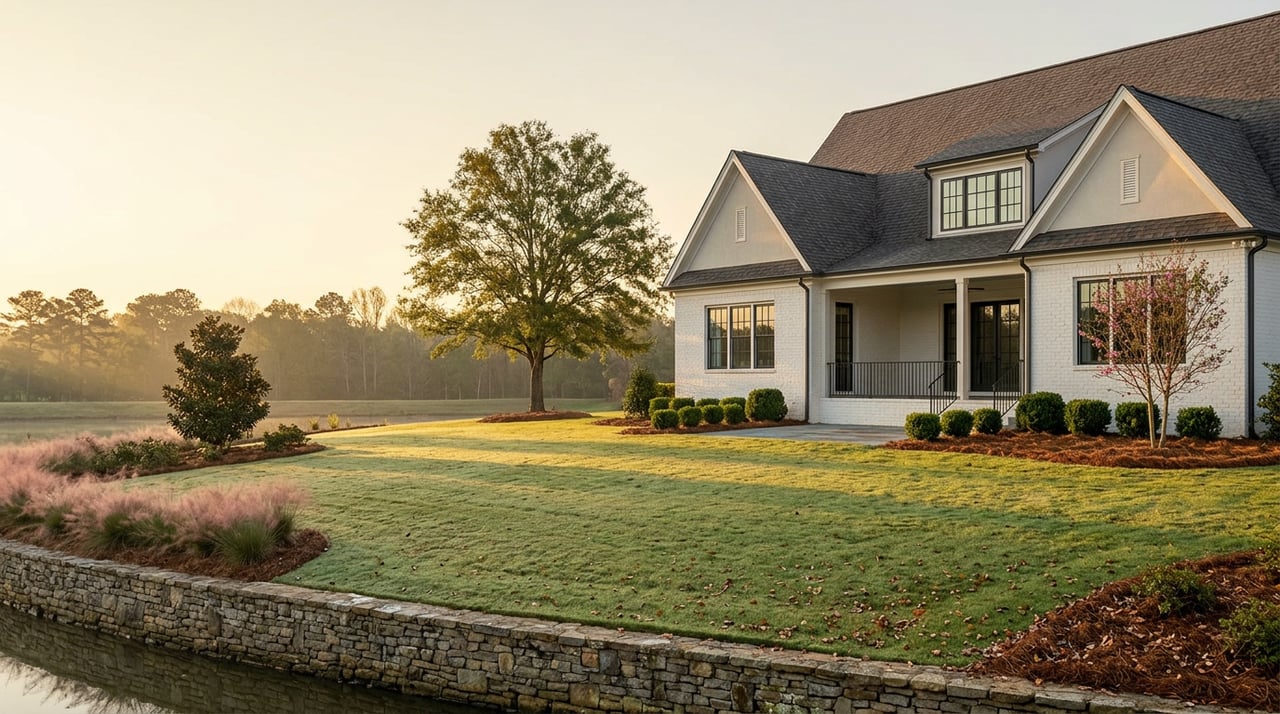
You close on a lake house on a Tuesday afternoon. Keys in hand, moving truck already unloaded, and the first Saturday on the calendar is circled for a maiden voyage off the dock that sold you on the property in the first place. Except that dock, the one photographed from every angle in the listing, the one that justified the price gap between this house and the one three coves over without water access, is no longer legally yours to use. Not yet. Maybe not for another two months.
That is not a hypothetical. It is how the U.S. Army Corps of Engineers structures every private dock on Lake Lanier, and it catches buyers in Flowery Branch off guard often enough that agents who work this shoreline treat it as its own transaction, running on its own clock, separate from the one your closing attorney manages.
The Permit Expires When the Deed Changes Hands
A Lake Lanier dock is not a fixture that conveys with the house the way a built-in range or a ceiling fan does. It sits on federally owned shoreline, land the Corps controls below the lake's full pool elevation of 1,071 feet, and the right to keep a structure there is governed by a Shoreline Use Permit issued to a specific person, not a specific parcel. When the deed changes hands, that permit expires. Immediately. The Corps does not treat a home sale as a permit transfer. It treats it as a permit ending and a new one beginning, and the new owner has to apply for it from scratch, in their own name, before the dock they just paid for is theirs to use.
The Corps' own change of owner instructions spell out what starts that clock: a recorded deed from the county, not a settlement statement, because the settlement statement is not proof of ownership in the Corps' eyes. A hand drawn site map showing the property line, the pathway, and the dock. A current survey. And, if the dock has any electrical service at all, a form called Exhibit C, completed and signed by a licensed electrician, certifying the wiring meets National Electric Code standards.
A Six to Eight Week Gap, Running on Its Own Clock
Here is where the timing catches people. A typical Georgia residential closing runs 30 to 60 days from contract to deed. The dock permit process does not start until after that deed is recorded, and once it starts, buyers who have gone through it report six to eight weeks before the new permit is issued, sometimes longer if paperwork comes back incomplete. The U.S. Army Corps of Engineers' change-of-owner requirements call for an area ranger to physically inspect the dock and shoreline for deficiencies before signing off.
Lay those two timelines next to each other and the gap becomes obvious:
| Milestone | Typical Timing |
|---|---|
| Contract to closing | 30 to 60 days |
| Deed recorded with county | Day of closing |
| Change of owner packet submitted to USACE | Days to weeks after closing |
| Ranger inspection of dock and shoreline | Scheduled after submission |
| New permit issued in buyer's name | 6 to 8 weeks after complete submission |
Add it up and a buyer can easily be two to three months into ownership before the dock is legally reissued to them. The house closes on schedule. The dock does not.
Why This Matters More Here Than on Most Other Lakes
Plenty of reservoirs let a new owner simply keep using an existing dock while paperwork catches up. Lake Lanier does not work that way, and the reason traces back to a 2004 carrying capacity study the Corps completed as part of its Shoreline Management Plan. That study set a hard ceiling of 10,615 private dock permits for the entire lake. A lottery in 2009 allocated what remained of that inventory, and since then the Corps has issued new permits only when an old one is formally released back into the system, which happens rarely.
That cap is why a valid permit held by the current owner for a property carries real weight in this market. As of March 2026, waterfront homes with a USACE dock permit held by the seller closed at a median sale price near $1,250,000 across Lake Lanier zip codes that include Flowery Branch's 30542, while comparable homes with lake access but no private dock closed nearer $675,000 over that same window. The gap is not really about square footage or finish level. It is the market pricing a scarce federal license that a new owner cannot simply go buy elsewhere.
What the Change of Owner Actually Requires
Buyers who treat the dock permit as an afterthought tend to be the ones who end up stalled after closing. The documentation the Corps wants is specific, and gathering it before the due diligence period ends, rather than after, is what separates a smooth transfer from a delayed one.
Before writing an offer, or early in due diligence, ask the seller for:
- The current alpha-numeric permit number, usually posted on the dock, a nearby tree, or an electric post along the shoreline
- The most recent Exhibit C electrical certification, and the date it was completed
- Any written notice from the Corps regarding deficiencies or violations tied to the dock or shoreline
- A copy of the original permit application or as-built drawing, if the seller still has it
If a seller cannot produce these, that is not automatically a dealbreaker, but it is a reason to call the Corps directly and verify status before removing contingencies. The Shoreline Management office and the Lanier Shoreline help desk both field these calls regularly, and confirming there are no open violations tied to a specific permit number takes a phone call, not a guess.
The Premium You're Paying Is for Paper, Not Lumber
It is worth separating two things buyers sometimes conflate. The physical dock, the boards, the flotation, the roof if it has one, is a maintenance item, and a straightforward one at that. The permit is the asset. A dock in excellent physical condition attached to a lapsed or non-compliant permit is, in the Corps' framework, not meaningfully different from no dock at all, because a revoked or abandoned permit does not stay with the property. It returns to the federal system, and with the 10,615 cap fully allocated, there is no guarantee it comes back to that shoreline again.
That is the part a standard home inspection will never flag. A home inspector checks the structure. Nobody checks the permit unless someone specifically asks the Corps.
What This Means If You're Under Contract Right Now
For buyers, the practical move is to build the timeline into the contract itself. It also means your closing attorney and your agent can start the change of owner submission the same week the deed records, rather than losing weeks to a buyer who did not realize the clock hadn't even started yet.
For sellers, the equivalent move is preparation before the home ever hits the market. Locate the permit number, pull the most recent Exhibit C if one exists, and have a current survey on hand. A listing that arrives with this paperwork already organized moves through a buyer's due diligence faster, and it signals that the dock, the feature carrying a meaningful share of the asking price, is exactly what it appears to be.
A Few Common Questions
Does the dock permit renew automatically after the change of owner is complete? Confirm the renewal process directly with the Corps.
Can a new owner use the dock while the change of owner application is pending? The permit belongs to the person named on it, and it expires at the deed transfer. Buyers should not assume continued use is authorized simply because an application is in process. Confirming status directly with the Corps before using the dock is the safer path.
What if the seller genuinely cannot locate the original permit paperwork? It happens, particularly on older homes that have changed hands more than once. The Corps can often locate a permit by address or by the alpha-numeric number if it is still visible on the dock or a nearby post. A call to the Shoreline Management office is the right first step rather than assuming the permit does not exist.
Buying or selling on Lake Lanier in Flowery Branch involves a second set of paperwork most standard transactions never touch. If you are weighing a waterfront purchase, or preparing to list one, C&C Harrington Homes can walk through what a specific property's dock permit status looks like before you write an offer or sign a listing agreement. Get in Touch to start that conversation early, while there is still time to build the timeline correctly.
This article is general information, not legal, tax or financial advice. Consult a qualified professional about your situation.